Pickup Experience
Designed a delightful pickup experience for riders and customers using smart lockers.
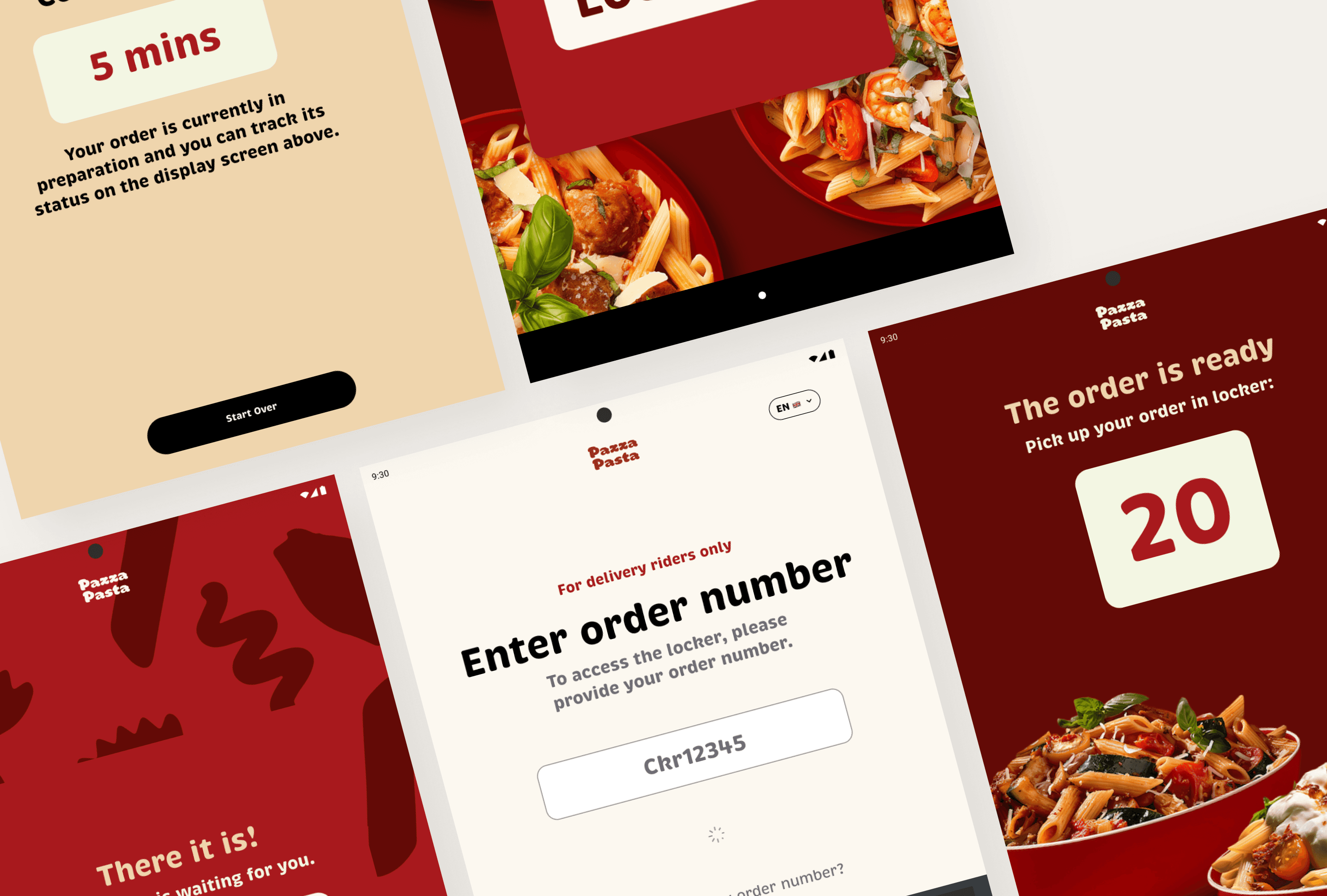
At the time of this project, Circus was operating in Hamburg through its dark kitchen model under the brand Pazza Pasta. Customers could place orders via our own consumer app or through third-party platforms like Lieferando and Wolt. Until then, our focus had been exclusively on delivery. To increase revenue, reduce our reliance on external platforms, and build stronger customer relationships, the team decided to introduce a pickup option. This strategic shift aimed to improve margins, encourage direct orders, and rebuild trust through a smoother experience.

Without smart lockers, customers and riders often picked up the wrong orders, leading to confusion, delays, and a loss of trust in the service. I was brought in to design the new pickup experience after the introduction of smart lockers, focusing on how customers use the app to collect their orders and how platform-based riders securely retrieve the correct items.

Through user interviews and stakeholder alignment, I identified key friction points in the pickup experience and shaped a design that balanced customer needs, rider behavior, and tech constraints.
Reduced order confusion by addressing the issue of riders handling multiple apps.
Prioritized features that make pickup safer and easier for customers using lockers.
Clarified locker access through clear PIN delivery for both customers and riders.
Built confidence in the system by ensuring support was available if needed.
These insights shaped a practical, user-centered direction for the new pickup experience.

Stakeholder Alignment
I started by aligning with Product, Ops, and Warehouse leads to clarify goals, define success metrics, and map technical constraints. We agreed to use smart lockers that unlock via PINs. I interviewed five customers and seven delivery riders.
User Research
Customers living within 15 minutes said they’d prefer pickup to save time and avoid fees.
Riders often handled orders from multiple apps, making it easy to grab the wrong bag.
Key Constraints
Smart lockers require a PIN for access.
Riders receive PINs from external apps; customers get them via our app.
Both use the same code.
There’s limited on-site staff and tight physical space, so the flow had to be simple and self-service friendly.

I conducted a competitor audit and visited five fast-food venues in Berlin to observe real-world pickup flows. These visits helped me gather insights on information hierarchy, user behavior, and signage effectiveness.
Using this input, I:
Collected data on how pickup flows are structured in physical environments
Ran a content workshop to define essential messaging and layout priorities
Aligned with stakeholders on display constraints, journey variations, and operational needs
We clarified two distinct user paths:
Customers unlocked lockers via a button in the app
Riders used a PIN provided by their delivery app to enter on our tablet
This alignment ensured the experience supported both user groups while fitting within real-world limitations.

Order Monitor
A large-screen interface showing “Cooking” vs. “Ready” orders, including platform and app logos, ETA, and clear status labels. To handle high volumes, the “Ready” column auto-scrolls, ensuring all orders remain visible.
Locker PIN Tablet
Riders check order status on the monitor, retrieve their PIN from the rider app, and enter it on the locker tablet to collect the correct bag.

I conducted a 3 days of onsite user testing after the release of the project and gathered those insights:
Flow is intuitive: Most riders and customers completed the pickup without assistance.
Accessibility matters: One rider couldn’t reach the locker tablet, highlighting the need for inclusive design.
Clarity reduces friction: Minimal instructions and live order status helped reduce confusion.
On-site testing is essential: It validated core assumptions and uncovered small improvements.
Positive customer feedback confirmed the experience was smooth and encouraged repeat use.

